
Watching a parent age is hard. You want them to be safe, comfortable, and cared for. But when it comes to choosing the right living situation, the options can feel overwhelming. If you have been searching for answers, you are not alone.
When comparing a personal care home vs assisted living, the key difference comes down to the level of medical care provided. Personal care homes follow a medical model with nursing staff on-site. Assisted living follows a social model focused on independence with personal support. In this guide, you will get a clear breakdown of both, including costs, services, and how to make the right call for your family.
What Is a Personal Care Home?
A personal care home is a licensed residential facility that provides 24-hour supervision, personal assistance, and nursing care. It serves seniors who need more than basic help but do not yet require full nursing home placement.
Personal care homes operate under a medical model. That means that licensed staff or registered nurses are always on duty. Most of the time, residents need help with more than one daily task, like getting dressed, taking a bath, grooming, and moving around.
These facilities also offer:
- Medication management and administration
- Continence support
- Help getting in and out of bed
- Meal preparation and feeding assistance
- Housekeeping and laundry
Personal care homes are best for older adults who have ongoing medical conditions, need regular monitoring, or are expected to need increasing levels of care over time.
In states like Pennsylvania, personal care homes are licensed separately from assisted living. Since 2011, Pennsylvania legally separated these two care communities into distinct categories with different requirements, staffing standards, and oversight rules.
The average cost of a personal care home ranges from $3,500 to $6,500 per month, depending on location, level of care, and facility type. In states like Colorado, costs can reach the higher end of that range.
What Is Assisted Living?
Assisted living is a residential care option for seniors who are mostly independent but need some help with daily tasks. Staff provide personal support, but medical care beyond first aid is not available on-site.
Assisted living communities focus on quality of life. The goal is to keep residents active, social, and independent for as long as possible. Staff help with everyday tasks, but they are not licensed medical professionals.
Core services in assisted living include:
- Help with bathing, dressing, and grooming
- Medication management (but not prescribing or adjusting dosages)
- Housekeeping and laundry
- Three meals per day in a communal dining area
- Transportation to appointments and outings
- 24-hour security and emergency call systems
Many assisted living communities also offer fitness classes, social events, movie nights, and organized trips. Some even allow pets, which research shows can improve senior well-being.
If a resident’s health declines and they need skilled nursing care, they are typically transferred to a nursing home or health care center. Assisted living staff can contact medical providers, but they cannot deliver clinical treatment on-site.
The average monthly cost of assisted living in the United States is around $4,500 to $5,500 per month. In cities like Denver, Colorado, costs often range between $4,800 and $6,200 per month.
Similarities Between Personal Care and Assisted Living
Both options serve seniors who need support but do not require full-time nursing home care. Here is what they share:
- Housing in a residential setting with private or semi-private rooms
- Three meals per day
- Assistance with personal care tasks like bathing and dressing
- Medication management support
- Housekeeping and laundry services
- Social activities and community engagement
- 24-hour staff availability
Both care communities also prioritize resident dignity and privacy. Trained staff are expected to provide care respectfully, without compromising personal boundaries.
Key Differences Between Personal Care and Assisted Living
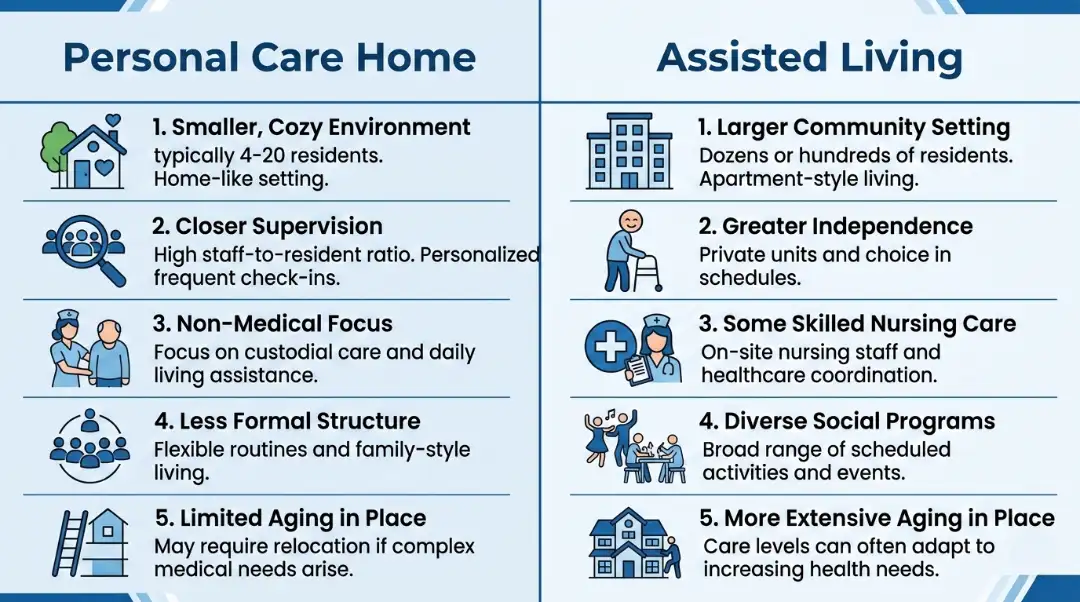
The main difference is the level of medical care available. Personal care homes have nursing staff on-site and follow a medical model. Assisted living follows a social model and does not provide skilled nursing care.
Here is a side-by-side breakdown:
| Factor | Personal Care Home | Assisted Living |
| Medical model | Yes | No |
| Nursing staff on-site | Yes (24-hour) | No |
| ADL assistance | Full support | Moderate support |
| Medication administration | Yes | Management only |
| Skilled nursing care | Yes | Not available |
| Age in place potential | Limited | Higher (in licensed AL) |
| Licensing | Separate license | Separate license |
| Average monthly cost | $3,500 – $6,500 | $4,500 – $6,200 |
| Room requirements | Varies by state | Private room often required |
| Best for | Medical needs, monitoring | Independent seniors needing support |
In Pennsylvania, assisted living residences are also required to provide a private room with a lockable door, a private bathroom, and a small kitchen area. Personal care homes are not required to offer these amenities under state law.
Another important difference has to do with Medicaid. Medicaid usually doesn’t pay for the extra staff and administrative costs that come with getting an assisted living license. This is one reason why many communities operate as personal care homes even though they offer similar services.
Factors to Consider When Choosing
Choosing between a personal care home and assisted living depends on your loved one’s current health, their expected future needs, your budget, and their personal preferences.
Ask yourself these questions before making a decision:
1. What is their current health status?
If your loved one has ongoing medical conditions, needs frequent monitoring, or requires nursing care, a personal care home is likely the better fit. If they are still relatively healthy and just need daily support, assisted living may be enough.
2. What are their expected future needs?
Think about where they may be in one to three years. Assisted living communities with full licensure allow residents to age in place, meaning they can stay even as their care needs grow. Personal care homes often connect to a broader continuum of care, including nursing homes and memory care.
3. What does the budget allow?
Both options carry significant monthly costs. Most private health insurance does not cover these expenses. Long-term care insurance may help offset costs. Medicaid eligibility varies by state and facility type.
4. What does your loved one want?
Their comfort, social preferences, and sense of independence matter. A senior who values community, activities, and autonomy may thrive in assisted living. One who needs more daily health supervision may feel safer in a personal care home.
5. What is the location?
Proximity to family is important. Being close allows for regular visits and lets family members stay involved in care decisions.
Signs It May Be Time to Make a Move
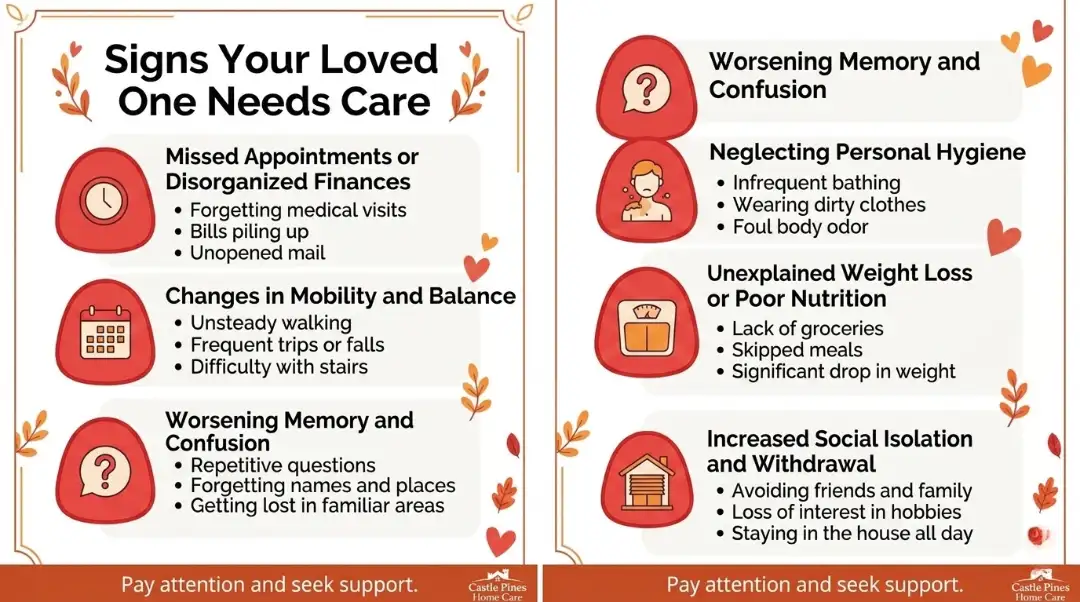
Many families wait too long because they are unsure when a transition is necessary. Watch for these signs:
- Repeated falls or balance issues at home
- Missed medications or confusion about dosages
- Poor nutrition or significant weight loss
- Isolation, depression, or withdrawal from social activities
- Difficulty managing hygiene, laundry, or household tasks
- Caregiver burnout in the family
If several of these apply, it is worth having a direct conversation with your loved one’s doctor before making a final decision.
Is Home Care an Option First?
Before choosing a facility, many families start with professional home care. This keeps older adults in a familiar environment while providing structured support. Home care services can include personal care assistance, medication reminders, companionship, and light housekeeping.
For families who are not yet ready for a full-time facility placement, home care can serve as a bridge. It also gives families time to evaluate whether the level of care needed matches what a personal care home or assisted living community can offer.
This is worth exploring, especially if your loved one is still relatively independent and simply needs consistent daily support.
Making the Right Choice for Your Loved One
There is no universal right answer here. The best choice depends on your loved one’s health, independence, and what your family can realistically support.
If you are based in the Denver area and exploring your options, Castle Pines Home Care offers Personal Care Services in Denver that can help your loved one remain at home safely before or instead of a facility transition. Our team works directly with families to create a care plan that fits the individual, not a one-size-fits-all model.
For families uncertain about where to begin, consulting with a home care expert can provide clarity on the appropriate level of care required. The assessment can inform the decision regarding the most appropriate next step, whether it be home care, a personal care home, or an assisted living community.
The Verdict: Personal Care Home vs Assisted Living
Personal care homes are better for seniors with active medical needs who require nursing support. Assisted living is better for seniors who are mostly independent and want a structured, socially active lifestyle with some personal support.
Both are legitimate long-term care options. The decision comes down to the level of care your loved one needs today and what you anticipate they will need over time. Cost, location, and personal preference all play a role.
If your loved one is still able to live at home with some professional help, home care is always worth considering before moving to a facility. It preserves independence and can delay or even prevent the need for a facility placement.
FAQs About Personal Care Home vs Assisted Living
Is assisted living the same as a personal care home?
No. While both offer housing, meals, and help with daily tasks, personal care homes provide a higher level of medical supervision. Assisted living is designed for seniors who are more independent.
What are the personal care home requirements?
Requirements vary by state. In Pennsylvania, personal care homes must be separately licensed, have trained staff, and meet specific care standards. In Colorado, facilities must meet state health department regulations for residential care.
Does Medicaid cover assisted living or personal care homes?
Medicaid coverage for both options varies by state. Some states offer Medicaid waivers that help cover assisted living costs. Personal care homes may also qualify under certain state programs. It is best to check with your state’s Medicaid office directly.
Can someone with dementia live in an assisted living community?
Many assisted living communities have a dedicated memory care unit for residents with dementia or Alzheimer’s. If memory care needs are significant, a facility with a licensed memory care program is the safer choice.
What does a personal care facility provide that assisted living does not?
A personal care facility provides on-site nursing care, 24-hour medical supervision, and support for higher-level health needs. Assisted living does not provide skilled nursing care or clinical medical services.
Is home care better than assisted living?
For seniors who are relatively independent, home care allows them to stay in a familiar environment with professional support. It is often more flexible and less expensive in the early stages of care. As needs increase, a transition to a care facility may become necessary.