
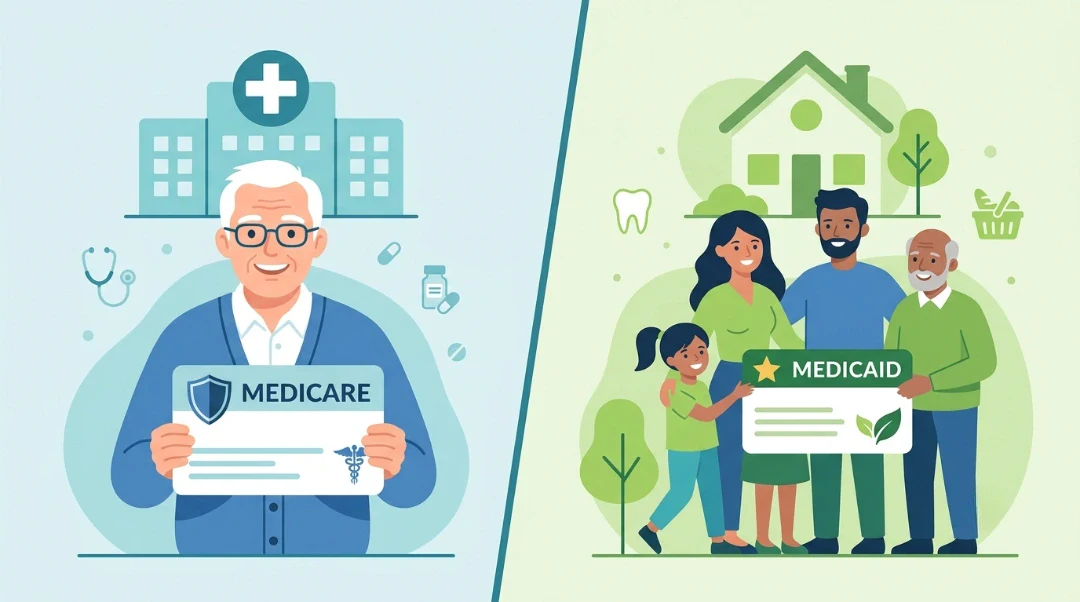
If you’re comparing Medicare and Medicaid, the names can make the two programs sound almost identical. They’re not. Medicare is mainly federal health insurance for people age 65 and older and certain younger people with disabilities or specific conditions, while Medicaid is a joint federal and state program for eligible people with limited income and resources. For families comparing Care and a Nursing Home, knowing this difference can affect how they plan for medical care, personal assistance, and long-term support.
The good news is that the basic idea is simple. This guide explains who each program serves, what each one covers, how costs work, whether someone can have both, and why Medicaid can matter when a person needs ongoing help at home or in a nursing facility.
What Is Medicare?
Medicare is a federal health insurance program primarily designed for adults aged 65 and older, as well as younger individuals with specific qualifying disabilities. It operates uniformly across all 50 states, meaning eligibility rules and core benefit structures remain consistent no matter where you live.
Medicare consists of four distinct parts:
-
Part A (Hospital Insurance): Covers inpatient hospital stays, care in a skilled nursing facility, hospice care, and limited home health services.
-
Part B (Medical Insurance): Covers doctor visits, outpatient services, medical supplies, and preventive services.
-
Part C (Medicare Advantage): Private plans that combine Part A and Part B, often including prescription drug coverage and extra wellness perks.
-
Part D (Prescription Drug Coverage): Helps cover the cost of prescription medications.
It’s important to realize Medicare acts primarily as medical insurance. It handles acute medical conditions, surgical recovery, and doctor visits, but it wasn’t designed to pay for long-term daily personal assistance.
What Is Medicaid?
Medicaid is a joint federal and state program that provides health coverage to individuals with limited income and assets. Because each state administers its own program within broad federal guidelines, eligibility limits, available benefit programs, and covered services vary state to state.
Unlike Medicare, Medicaid serves as a vital safety net for comprehensive long-term support. It assists low-income seniors, adults with disabilities, pregnant women, and families with children.
For aging adults, Medicaid is the primary public payer for ongoing, non-medical care. It funds long-term stays in nursing facilities and offers state-specific waiver programs designed to help individuals remain in their own residences.
Key Differences Between Medicare and Medicaid
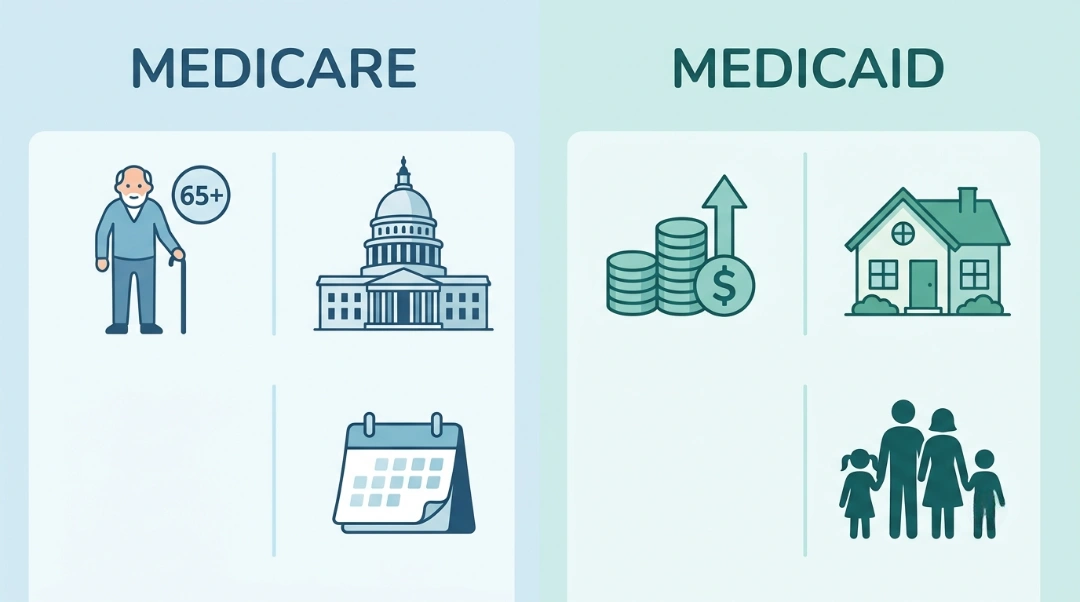
While people often confuse them, these two programs feature distinct foundational rules, funding mechanisms, and target populations.
| Feature | Medicare | Medicaid |
| Primary Eligibility | Age 65+ or specific qualifying disabilities | Financial need (income and asset thresholds) |
| Administration | Federal government (CMS) | Joint Federal and State partnership |
| Cost to Beneficiary | Monthly premiums, deductibles, copays | Very low or zero out-of-pocket costs |
| Long-Term Care | Extremely limited (short-term recovery only) | Comprehensive long-term support covered |
| Coverage Consistency | Identical rules across all states | Varies depending on state residency |
Understanding these basic differences helps prevent unexpected medical bills when arranging ongoing support.
What Do Medicare and Medicaid Cover?
Medical Care vs. Custodial Support
The biggest distinction involves medical care versus custodial support. Medical care includes clinical treatments provided by licensed doctors, registered nurses, or physical therapists. Custodial support includes assistance with activities of daily living (ADLs)—such as bathing, dressing, meal preparation, mobility, and toilet assistance.
What Medicare Covers
-
Inpatient hospital care and physician services.
-
Outpatient physical, occupational, and speech therapy.
-
Short-term skilled nursing facility stays following a 3-day inpatient hospital stay (up to 100 days max).
-
Medically necessary durable medical equipment (DME) like wheelchairs or walkers.
-
Short-term, intermittent skilled home healthcare ordered by a doctor.
What Medicaid Covers
-
Comprehensive inpatient and outpatient medical services.
-
Long-term nursing facility stays.
-
Personal care assistance with daily activities.
-
State-specific Home and Community-Based Services (HCBS) waivers.
-
Non-emergency medical transportation.
Can You Have Both Medicare and Medicaid?
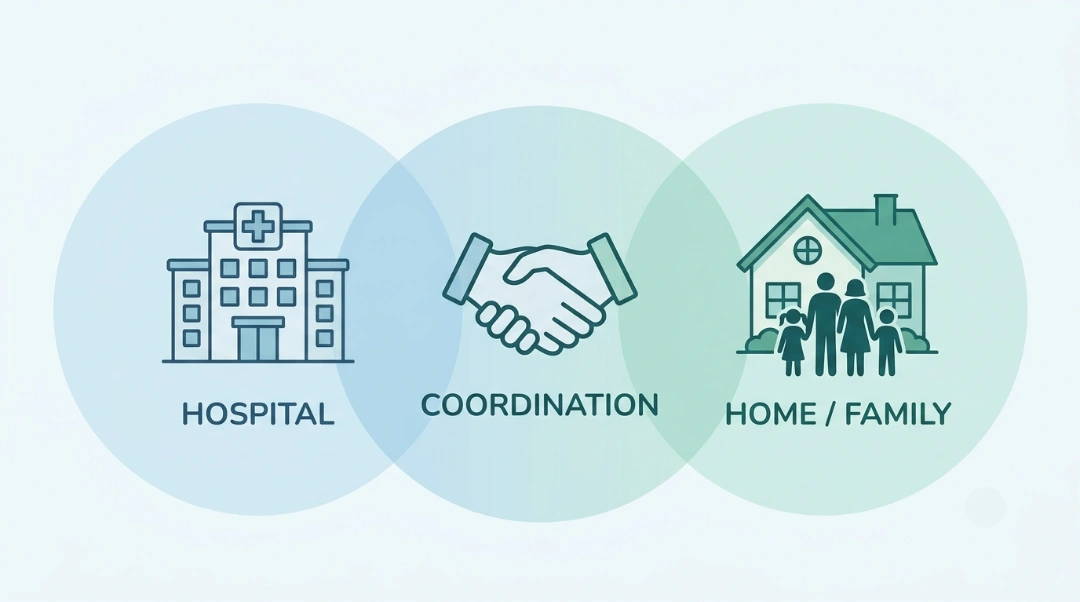
Yes, you can have both Medicare and Medicaid at the same time if you meet the age or disability requirements for Medicare while also falling within your state’s Medicaid income limits. Individuals enrolled in both programs are referred to as “dual eligible.
When you hold dual eligibility, Medicare acts as your primary insurance, paying first for covered medical services, hospital care, and prescription drugs. Medicaid acts as secondary coverage, filling in gaps by covering Medicare deductibles, copayments, monthly premiums, and additional services that Medicare excludes—such as long-term personal assistance.
Medicare and Medicaid Costs: What You’ll Actually Pay
Out-of-pocket expenses vary significantly depending on which program covers you.
Expected Medicare Out-of-Pocket Expenses
-
Part A: Premium-free for most, but carries a high deductible per benefit period ($1,632 in recent years), plus daily copays for extended hospital stays.
-
Part B: Features a standard monthly premium ($174.70 standard baseline in recent years) and an annual deductible, after which you typically pay 20% of approved service costs.
-
Part D & Advantage: Monthly premiums, deductibles, and copays vary by private plan tier.
Expected Medicaid Out-of-Pocket Expenses
Medicaid offers low or no out-of-pocket costs for qualified beneficiaries. Depending on state rules, nominal copayments (often $1 to $3) may apply for certain prescription drugs or office visits, but essential personal assistance services carry no direct fee once qualified.
How to Apply for Medicare or Medicaid
Applying for Medicare usually starts three months before your 65th birthday, during what’s called the Initial Enrollment Period. You can apply online through the Social Security Administration at ssa.gov, by phone, or in person at a local Social Security office. Miss that window, and you may face a late enrollment penalty unless you qualify for a special enrollment period.
Medicaid applications don’t run on a yearly schedule. You can apply any time of year directly through your state’s Medicaid website or through the Health Insurance Marketplace at healthcare.gov. Processing times vary, but most states aim to make a decision within 45 days, or 90 days if a disability determination is involved.
Where In-Home Support Fits Into the Picture
Neither program was built to pay for full-time, non-medical help around the house, and that catches a lot of families off guard. Medicare won’t cover ongoing help with bathing, meal prep, or daily companionship unless it’s tied to a short-term, medically necessary recovery plan. Medicaid can cover some of this through state-specific home and community-based waiver programs, but eligibility and availability depend heavily on where you live and how long the waitlist runs.
That gap is exactly why so many families end up paying privately for non-medical support, whether it’s a few hours a week or daily visits. If you’re in the Denver area and trying to figure out what that looks like in practice, Castle Pines Home Care works with families to arrange home care services in Denver that cover everything from companionship to help around the house. For a parent who just needs a daily check-in and a reminder to take their pills on time, medication reminder services for seniors in Denver can be the difference between a missed dose and a manageable routine.
Final Thoughts
Once you see Medicare and Medicaid side by side, the confusion tends to clear up fast. One is federal and tied to age, the other is a state partnership built around income, and plenty of people end up using both at once. The real work is figuring out which rules apply to your specific situation, checking your state’s Medicaid limits, and marking your enrollment dates so you don’t miss a deadline.
If you’re supporting an aging parent or a loved one with a chronic condition and you’re trying to figure out what falls outside what Medicare and Medicaid actually pay for, contact us at Castle Pines Home Care and we’ll walk you through the options available in your area.
Frequently Asked Questions
Is medicare and medicaid the same thing?
No, they are completely separate programs with different rules. The age-based program serves seniors and individuals with disabilities regardless of wealth, while the income-based program serves low-income individuals regardless of age. They use different funding sources and separate application systems.
What is the primary medicare and medicaid difference regarding long-term care?
Medicare refuses to pay for long-term custodial care, such as daily help with bathing or meal preparation. Medicaid covers long-term care in nursing homes and provides home care waivers to help seniors remain in their residences safely.
Can a person lose their state health benefits if their income rises?
Yes, you can lose these benefits if your monthly income or total countable assets exceed your state’s specific limits. State agencies perform regular reviews to confirm that every enrolled individual still meets the strict financial requirements.
What happens if I miss my age-based enrollment window?
Missing your initial window can result in a permanent financial penalty added to your monthly premiums. It can also delay your coverage start date, leaving you without health insurance for several months out of the year.
Do these programs cover prescription drugs completely?
The age program requires you to buy a separate Part D plan or a private advantage bundle to get drug coverage. The income program includes prescription drug coverage in all states, generally requiring only a tiny copay or no cost at all.