Finding the perfect senior living arrangement for a loved one can often feel like trying to get through a complicated maze. You may have heard of assisted living, nursing homes, and adult care homes, but the personal care home is the one that confuses people the most because the rules and names for them vary from state to state.
This all-encompassing guide will clear up any confusion. We’ll talk about what a personal care home is, how it varies from other types of care, the specific services they offer, and most importantly, how to choose the correct one for your family with confidence. We want to give you information that is so clear and authoritative that it not only answers your questions but also gives you the confidence to make a decision based on what you know.
What Is a Personal Care Home?
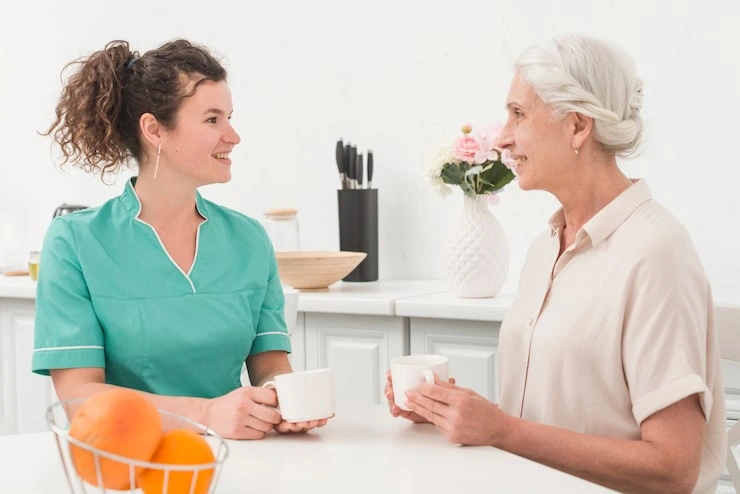
A personal care home is a licensed residential facility that provides non-medical support to adults who need help with activities of daily living (ADLs), such as bathing, grooming, dressing, and eating, but don’t require around-the-clock skilled nursing care.
Think of it this way: it sits between living independently at home and moving into a full nursing facility. Residents get a private or semi-private room, meals, and hands-on personal care within a home-like setting. Most states require these facilities to hold a licensed personal care certification before they can legally operate.
Difference Between Personal Care and Assisted Living
Personal care homes and assisted living communities both support seniors with daily tasks, but they’re not the same thing. Personal care homes are typically smaller, more affordable, and offer basic ADL support. Assisted living communities are larger, often more regulated, and may include a broader range of services, amenities, and on-site programming.
The easiest way to think about it: a personal care home is like a family house with a caregiver. Assisted living is more like a small hotel with a care team.
Personal care homes usually house fewer than 20 residents. That smaller ratio means more one-on-one attention, which many families actually prefer. Assisted living often has more structure, memory care units, and therapy options, but also a higher price tag.
If the person needing care is relatively mobile, socially independent, and mainly needs help with personal hygiene or medication management, a personal care home is often the better fit.
Personal Care Home vs. Nursing Home
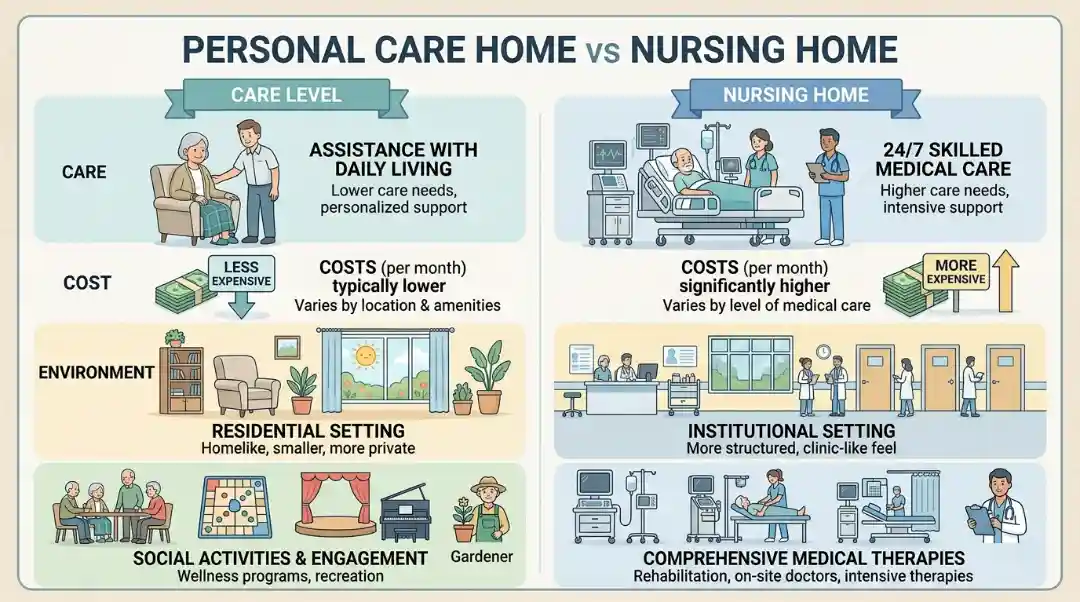
A personal care home supports adults who need help with daily tasks but are medically stable. A nursing home provides 24-hour skilled nursing care for people with complex medical needs, chronic illness, or recovery from surgery. The key difference is the level of medical supervision.
Think of it on a spectrum. At one end, you’re living independently at home. Move along the spectrum and you hit a personal care home. Keep going, and you reach a nursing home or a hospital.
Nursing homes are staffed with registered nurses around the clock. They handle wound care, IV therapy, feeding tubes, and complex medication regimens. They’re also significantly more expensive.
If someone is recovering from a hip replacement and needs temporary skilled nursing, a nursing home or rehab center makes sense. If they’re an 80-year-old who simply needs help getting dressed and staying safe, a personal carehome is likely the right call.
Is Assisted Living Considered Long-Term Care?
Yes. Is assisted living considered long-term care? In most cases, yes, because it supports individuals who need ongoing assistance with daily tasks. Personal care homes also fall under this long-term care umbrella.
In short, personal care homes are best for individuals who enjoy a home-like setting and need modest levels of daily support. Assisted living suits those who want a larger environment with more services.
Services and Amenities to Expect
Most personal care homes cover the core needs without overcomplicating things. Here’s what’s typically included:
Personal care support: Help with bathing, grooming, dressing, and toileting.
Medication management: Staff assist with or remind residents to take medications on schedule. This is one of the most common reasons families choose this setting.
Meals and nutrition: Three meals a day, plus snacks, are standard. Many homes accommodate dietary restrictions.
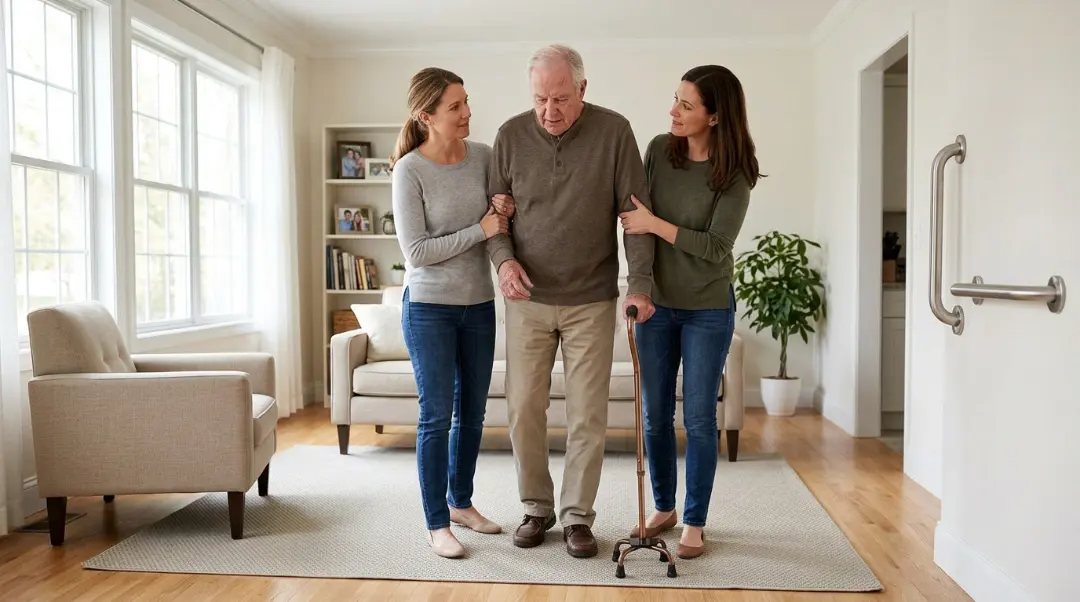
Mobility assistance: Support with walking, transferring from bed to chair, and fall prevention.
Housekeeping and laundry: Basic cleaning and linen services are usually included.
Social activities: Group activities, games, and outings help prevent isolation. Social engagement is a real health factor for older adults.
Some personal care nursing centers also offer light therapy services, transportation to appointments, and spiritual programming. Services vary by state regulations and individual facilities, so always ask for a written list before committing.
Lifestyle and Amenities
The shift from the home to a PCH is often justified by the increase in social engagement and quality of life.
- Social & Recreational Activities: A structured daily calendar of activities, including exercise classes (yoga, walking groups), cognitive games (trivia, brain teasers), craft projects, and entertainment.
- Transportation: Scheduled transportation for group outings, shopping, or individual medical appointments.
- On-Site Common Areas: Comfortable spaces for residents to socialize, such as libraries, activity rooms, living rooms, and beautiful outdoor gardens or patios.
- Personal Amenities: Many facilities offer private apartments with kitchenettes, utilities, and cable/internet service included. Larger facilities often include on-site salons, barbershops, or small cafes.
Benefits and Drawbacks of Personal Care Homes
Like any senior care option, personal care homes come with advantages and limitations. Understanding both sides helps families make more confident decisions.
Benefits
Affordability: Personal care homes cost significantly less than nursing homes or large assisted living campuses.
Home-like setting: Smaller environments feel warmer. Residents often know each other and staff by name.
Flexible care: Staff can adjust support as needs change over time.
Family access: Most homes encourage regular family visits and involvement.
Aging in place: Many residents stay for years in the same community, creating stability.
Drawbacks
Limited medical care: If a resident needs skilled nursing, IV medications, or wound care, a personal care home can’t provide that.
Varying quality: Standards differ by state and by owner. A licensed personal care facility in one state may have looser regulations than the next.
Fewer amenities: Smaller homes may not offer pools, fitness centers, or specialized therapy.
Staff turnover: Smaller facilities sometimes struggle with consistent staffing.
The bottom line: personal care homes work well for adults who need help, not intensive medical treatment. Once medical needs increase, a transition to a higher level of care may be necessary.
Cost of Personal Care Homes
The cost of what is personal care at home versus a residential setting is one of the first questions families ask. Personal care homes typically run between $1,500 and $5,000 per month depending on location, room type, and care level.
Most costs are paid out-of-pocket. Medicare generally does not cover long-term personal care home stays. Medicaid may cover some costs depending on the state. Long-term care insurance is another option worth exploring early.
Here’s a rough cost breakdown to keep in mind:
- Basic room and care: $1,500 to $3,000/month (small or rural homes)
- Mid-range facilities: $3,000 to $4,500/month
- Premium or urban locations: $4,500 to $6,500/month
Always get a detailed contract that spells out exactly what’s included and what costs extra.
Does Insurance Cover Personal Care Homes?
Most personal care homes are private-pay. Long-term care insurance may provide coverage, depending on the policy details. Medicaid coverage varies by state and is generally limited.
How to Choose a Good Personal Care Home
Choosing the right home isn’t something to rush. Here’s a practical checklist that experienced caregivers and eldercare advisors recommend:
Visit in person. No brochure tells the full story. Notice the smell, the noise level, and how staff interact with residents.
Ask about staff-to-resident ratios. A ratio of 1 caregiver to 6 or fewer residents is generally safer.
Check state licensing. Each state maintains a public registry of licensed personal care facilities. Look up the home’s inspection history and any violations.
Ask about staff training. Are caregivers certified? How are they trained to handle emergencies or behavioral changes?
Review the contract carefully. Look for hidden fees, move-out clauses, and what happens if care needs increase.
Conclusion
Families may make smart, confident choices regarding long-term care if they know what a personal care home is. These homes provide a warm, homey atmosphere, one-on-one care, and help with everyday tasks. They are great for those who want to be safe, comfortable, and independent without the stress of medical care.
When picking a home, think about how much care is needed, the mood, the number of staff members to residents, and the rules set by the state. Always believe your gut; your loved one’s comfort and dignity are the most important things.
Castle Pine Home Care is here to help you find Personal Care Services in Denver South. They will take you through every step of your search with care, knowledge, and a promise of great service.
FAQs
What does a personal care home provide?
A personal care home provides non-medical help with daily activities like bathing, dressing, meal preparation, and medication reminders. It’s designed for adults who need regular assistance but don’t require skilled nursing care.
Is a personal care home the same as a nursing home?
No. A nursing home provides 24-hour medical supervision for complex health needs. A personal care home focuses on daily living support for adults who are medically stable.
Who pays for personal care homes?
Most costs are private pay. Medicaid may cover some expenses depending on your state. Medicare generally doesn’t cover long-term stays in personal care settings.
How do I know if a personal care home is licensed?
Each state maintains a public registry of licensed facilities. Contact your state’s Department of Health or use tools like the Eldercare Locator to check licensing and inspection history.
What’s the difference between personal care at home and a personal care home?
What is personal care at home refers to a caregiver coming into someone’s private residence to help with daily tasks. A personal care home is a shared residential facility where multiple residents receive care in one location.
Can someone with dementia live in a personal care home?
Some personal care homes accept residents with mild to moderate dementia. However, advanced dementia often requires a memory care unit or nursing facility with more specialized staff training and security measures.