The older you get, the wiser you are,” or the easier it is to get old. As we age, we may begin to experience the inability to do the things that we were once capable of doing for ourselves. Think about the pain of making breakfast every morning, fighting to get up those stairs, and remembering that trip to the store you took last week. For some senior adults, they are still able to care for themselves, but for others, it takes someone to help get them through those most basic of daily activities.
I believe that learning about 10 Everyday Tasks That Become Harder For Seniors Without Help is vital for many people, as it could help them understand that they need to pay more attention to someone they love and care for. Because people become older and struggle to do what they used to be able to do before, their family members and close people need to be more conscious about their actions and try to provide comfort and help when it is needed. This way, every senior will be able to live safely and do as much as they can for themselves without putting themselves in any danger.
They might need help with something seemingly simple, like getting up from the bed, but without assistance, they might hurt themselves. I think that knowing about common changes that come with aging and how they could affect a person is important because it helps family members know how to behave in certain situations. Not only patience and caring, but also the ability to look after oneself. Have you got it?
1. Bathing and Maintaining Personal Hygiene

Taking a bath can be a major hassle for a lot of your senior loved ones. If they are trying to sink into or step out of that tub or shower, then they are probably fighting an uphill battle. They can’t forget about the bathroom too… It’s one of the most dangerous rooms in the house for everyone!
Washing, brushing, cutting, and other procedures of personal care that seniors ought to perform are connected with several difficulties. These procedures can be painful for people with arthritis, muscle shortening, decreased mobility, and reduced range of motion in the shoulders. Have you thought about what it’s like for seniors to lift the faucet to wash their hair, trim their nails, brush their teeth, and put on their shoes? For many seniors, those momentous activities of daily living seem as arduous as summiting Everest. What can a caregiver do? Time for a new adventure? It starts with lovingly feeling safe in the bathroom. Think about strong grab bars, slip-resistant flooring, and a good shower chair—and a kindhearted assistant who respects a senior’s desires.
2. Preparing meals and eating healthy food
Provision for yourself can be one of the most demanding tasks a senior will tackle. Making the list, doing the shopping, chopping, cooking, and cleaning—it’s a list of ‘must-dos’ that doesn‘t allow for much time or energy to spare. A reduction in strength in the hands and a decrease in agility make even opening a tin or carrying shopping a challenge, and using a sharp knife or stirring a hot pan? No, no! How can we help? With tender, loving hands.
This is why a large number of old people lose the will to cook and prefer to only eat a few prepared dishes. Some later forget what they wanted to cook and use ingredients that have already been prepared and sit forgotten on the stove. In addition, many old people do not dare to open jars and food bags. As a result, they can become malnourished.
Measures to provide for the welfare of older people can help avoid any of the negative effects of a lack of proper diet as a result of some physical restrictions in the process of cooking. For example, you need to be able to provide the aged with food that is partially prepared, with minimal cooking, and accordingly, less effort and energy. In addition, relatives and carers can support older people in shopping and storing products at their fingertips.
- Getting Dressed and Choosing Appropriate Clothing
It might seem like a relatively insignificant task, but dressing yourself is quite a complex task that involves a good amount of motion, fine motor skills, and more. For older adults who have limited mobility, bending down to tighten your pants, putting socks on your feet, or reaching behind your head to get your bra or shirt buttoned is difficult. The motion of even getting a simple article of clothing on can be a pain in the back or shoulders due to limited range of motion. Taking off the clothing is just as hard, particularly with shoes and socks since you have to bend down to tie your shoes or stand on one good leg to get your socks and shoes on.
A senior may have issues with orientation or memory and forget to dress according to weather conditions.
In this instance, the answer could be using elastic waistbands, slip-on shoes, and many other types of clothing gear so that one doesn’t have to worry about so many tiny and fiddly details. Then what gentle art of patience would you practice if your employee was helping an elderly person get dressed? Wouldn’t you put the elderly person in charge of their clothing and give them all the time they wanted?
4. Walking, Walking Up and Down Stairs and Moving Around the House
Now consider the challenge that even the smallest of things is extremely difficult and painful to carry on with your current condition or pain. How do they get off the chair? What are they doing getting off the bed? Imagine an elderly individual at the bottom of a staircase, the mere thought of falling from the top of the stairs keeps them rooted to the ground level. The fear intensifies, and suddenly they have been confined to narrow hallways by the fear of falling up the stairs and that any step might cause them to fall.
5. Shopping for Groceries and Essential Supplies
For many seniors, going grocery shopping can seem to be an uphill climb. Imagine wading through crowded aisles, bending down to grab some produce, carrying a heavy load in a wagon, waiting in long lines, and finding a way to the car—all of these activities take energy that those with limited mobility don’t have. Are these trivial tasks or cardio?
Now, it’s much more difficult for older people with visual problems. Squinting to read labels, trying to compare the pricing, and counting out your change before you can get your bags—all the things we would do fairly easily are not only difficult but also dangerous in the street, on sloping pavements, and in crowded shops. These same bags all of a sudden are a strain on your joints and muscles, which you must avoid at all costs.
So what can we do? Families can jot down a weekly shopping list and buy their groceries online or go shopping with their family members. Filling up on essentials at home means there are lots of supplies in storage and only having to go shopping every so often. Isn’t it time we lighten the load?
6. Cleaning the House and Doing Laundry
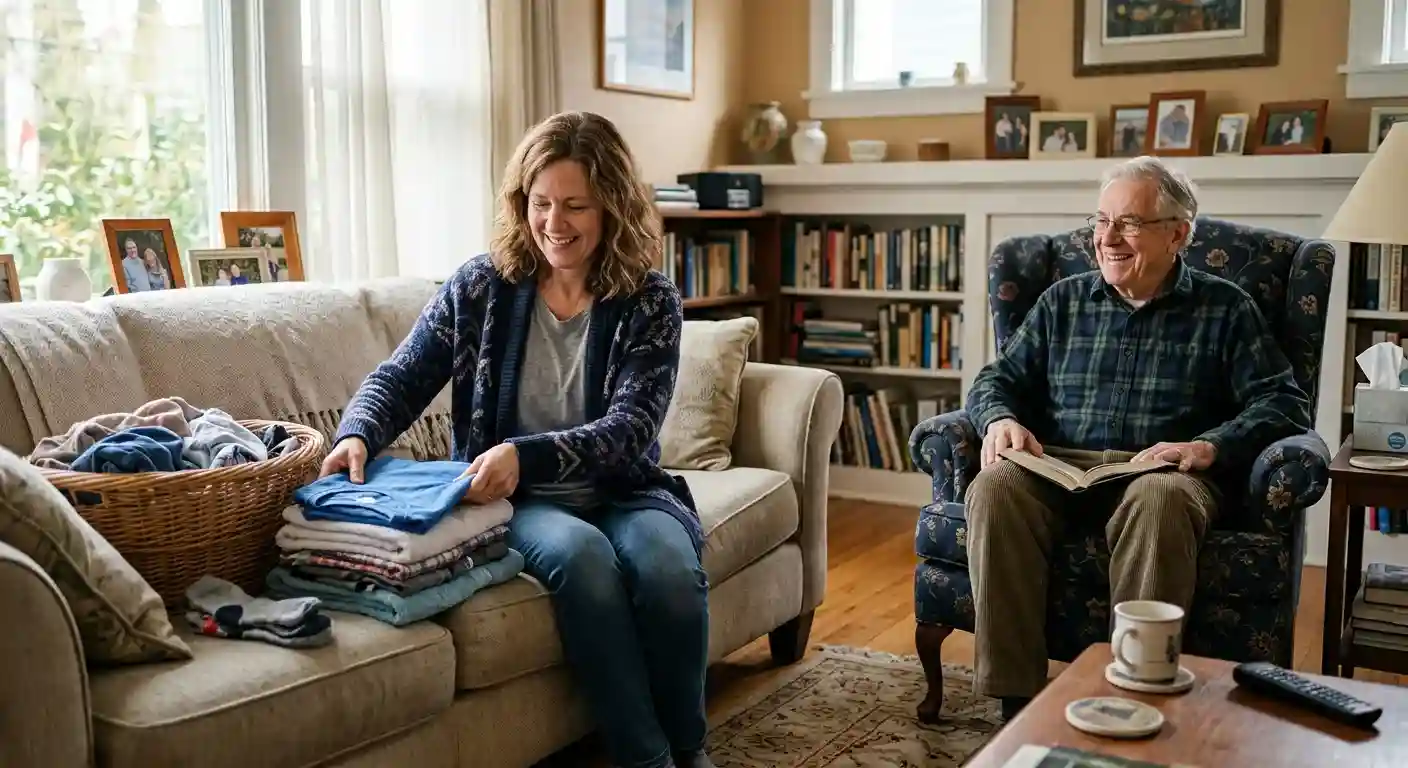
Have you ever noticed how common housework can become a major undertaking? Old folks, that is. Dropping off dirty dishes, doing laundry, and cleaning up are among the most unpleasant everyday chores due to a common decline in the immune system with age. For senior citizens with a chronic health problem and limited mobility, allergens and dust can be even more treacherous.
How can we assist in keeping these draining jobs simpler? Easy—bite the bullet and take the task one little job at a time. For instance, establish a task for the day, and when that task is finished, cross it off, make a strategy for the next task for the day, and reach it. It may additionally be handy to have a cleaning service come to your house from time to time for jobs that seem to be overwhelming.
7. Managing Medications and Medical Appointments
Picture a dozen pills every day—each one a little miracle, but hard to tell apart. For many seniors, this is everyday life as they try to keep chronic conditions under control. But a great deal more than administering the right number of pills at the right time and refilling when necessary, how do they tell the different containers apart when their eyesight is not great and their memory is even worse? And how do they remember the right time and use the right quantity?
Now, meet family support. Maybe it’s a sibling, grandson or granddaughter, spouse or partner—whatever the composition, the family member becomes the stabilizing force in this tempest. Imagine you are required to take medication correctly all the time, in the right amount and at the right time. Someone will be there to follow every instruction to the letter to do that. The family support person, pharmacist, or doctor. The doctor is available to answer questions and ensure that you understand the risks and consequences of what is going to happen if you miss the medication and to remind you to go back to the clinic if you miss a dose. But if the translation is unclear and your loved ones cannot understand what the doctor is saying, and memory loss prevents remembering what the doctor said, how can you ask questions? The support person is on hand to note what is said so that you can develop a list of questions.
8. Handling Finances, Bills, and Important Paperwork
Think for a moment: managing your household budget—regularly—can be daunting and not always easy; juggling statement due dates, number of payments, required passwords, and a desk in a filing cabinet; now think old age, vision, dexterity, tactile skills, and memory—those same activities. How overwhelming! Unpaid statements, missed payments, and the decline of finances and knowledge leave them more vulnerable to scams, fraudulent calls, transactions, and hacks, and drive all of those details online, creating a nightmare for you and your loved ones; but does forgetfulness inevitably equal financial decline? Not in this household!
Helping seniors take charge of their financial life is about helping them stay organized and maintain their dignity. Families can do this by helping their loved ones remember bill due dates and set up bill pay. Financial documents can be stored in a safe but accessible way, and seniors should be free to make their own financial decisions without being embarrassed.
What about financial scams? Safeguarding the elder’s banking details is important. If the elder’s relative is a known and trusted person, finances can be managed by this person, who can identify scam phone calls and emails and block the scammer from harassing the elder. If the elder is increasingly being hounded by false claims, local police should be contacted.
9. Using Phones, Computers, and Everyday Technology
In today’s digital age, our phones, laptops, and numerous devices open up worlds of potential and independence for older adults. They connect, they assist, they make life better. But what if the technological learning curve is too much?
Now think about how difficult that must be when your brain is struggling too. Older adults are prime targets for scams, security breaches, and other cyberattacks, all of which hope to steal their private info and hard-earned cash. If you’re only familiar with the basics, a scam message can be confusing.
But there’s a solution. Making today’s devices less complicated could take the strain out of the technology: Bigger text and home screens, storing critical contact details, and captioning for videos. Using large-print instructions for everyday tasks means fewer calls for help.
How should we serve our elderly in today’s high-tech world? With patience and detailed descriptions, along with several instructions to be followed, we can help today’s seniors understand what can and can’t be done with a particular piece of equipment. This approach will help make technology a good thing rather than a scary one!
10. Remembering Appointments, Household Routines, and Daily Responsibilities
Lost your keys? Now what if that habit of losing your keys became a nightmare every morning? Keeping up with the trivial things for many seniors is an overwhelming thought. Maybe you’re losing your mind, and you’re not exactly sure where your last roll of toilet paper went, or you don’t remember your next appointment with the dentist.
It‘s do or die. Now consider what it‘s like to leave the stove on, forget to lock a door, or forget that you have to eat. Consider also not being able to tell time or not knowing the difference between night and day. These kinds of errors are unsafe for senior citizens and very worrisome to their families.
Thanks to this, household work can be done effortlessly. Consider a home care services in Denver where there are always reminders and unambiguous instructions. Stating the jobs in simple, clear-cut language can make things a lot easier. Having a normal and disciplined schedule reduces the burden on the seniors as they become comfortable and satisfied doing their given jobs without having to create havoc. Family members stay alert and keep track of everything regularly.
Conclusion
Daily life can be full of challenges, and they tend to get harder over time- especially for those who are living alone. Are you aware of the 10 daily tasks that seniors will find most difficult to do alone? Here’s a good list to think about: getting out of the shower, cooking a meal, lacing your shoes, grocery shopping, cleaning your house, or taking your medication. Our mission here is straightforward. We want to help our seniors feel independent and gain some sense of self-worth. If that doesn‘t excite you, then think: haven’t our elders certainly earned the right to do what they can, allow us to do what they can’t, and to be kept safe and comfortable?
Frequently Asked Questions
- How to tell if a parent is struggling to live alone?
How do I recognize the early warning signs of frailty? Look out for things such as a cluttered home environment, changes in appearance, and difficulty buying food or making an appointment.
- What are seniors’ daily activities?
Typical age-in-adult daily routine for an aging person: bathing, dressing, eating, self-care, and toilet needs, walking, and general personal care. But in addition to this is the daily routine of meal preparation, domestic work, shopping, and cleaning, which are also not less significant parts of the life of the aging person.